

Does Past Performance Really Predict Future Success?
And also, what 17 yrs from startup to unicorn looks like..

Hiring the right person has never been more important, or more challenging. In a world where we’re all trying to do more with less and hit our deadlines and budgets, it's easy to assume that past performance is the clearest indicator of future success. Employers frequently lean on this logic, scanning resumés for evidence that a candidate has "done it before" and will, therefore, do it well again.
It feels logical.
But what I’ve learned over the years is that the reality is more complex.
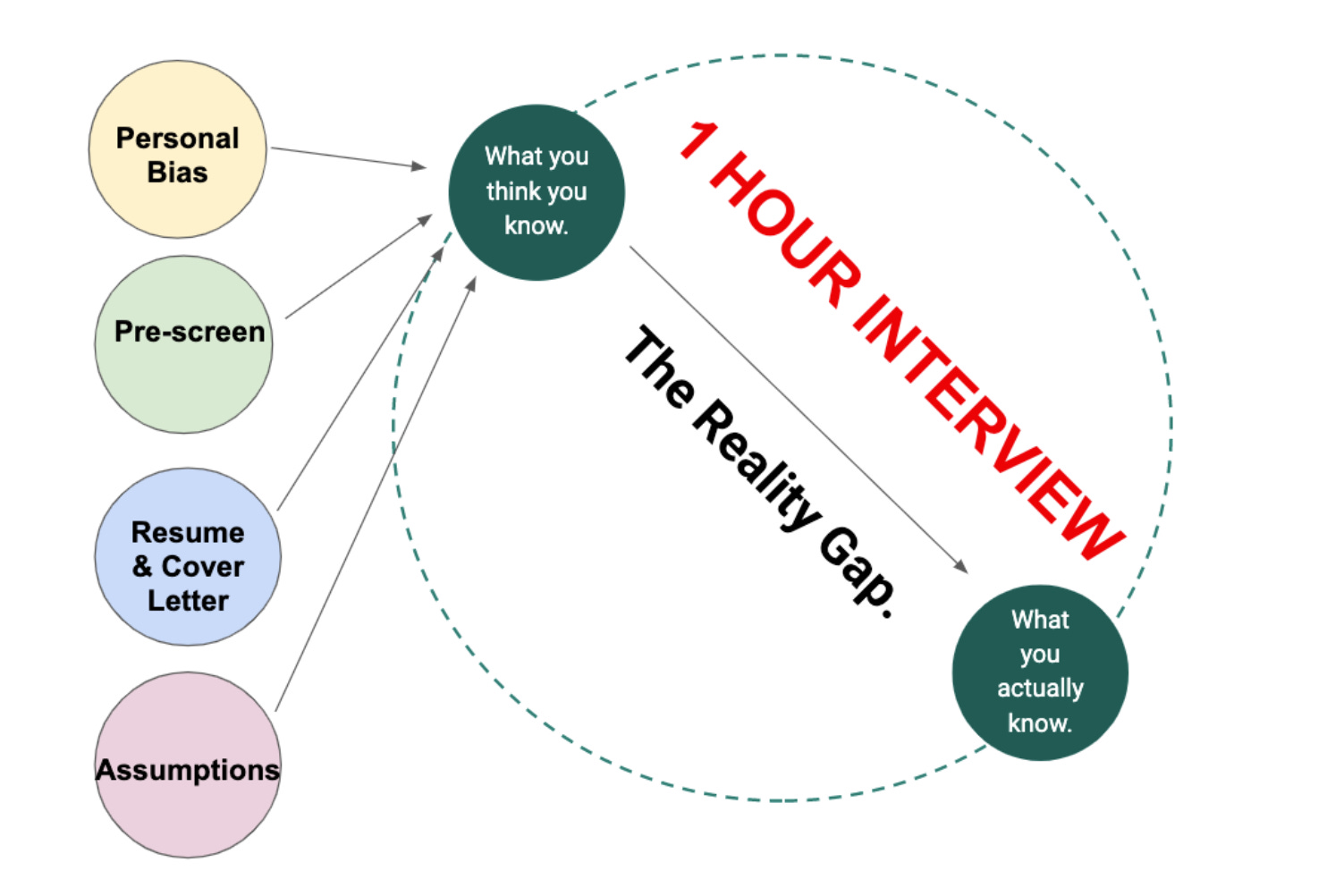
Research also increasingly shows that what someone has done in the past does not always predict what they will achieve in a new role, particularly when the context changes. If hiring is based solely on a CV’s content, then we might be missing the most important signals of future potential.
The Resume Trap – What We Think We Know
Hiring managers and recruiters often treat prior experience as a shortcut to predicting capability. More years in the job, a prestigious former employer, or a track record of rapid promotions are all taken as markers of quality.
Again, it can feel logical, but these assumptions can be misleading.
This reliance on past performance is understandable because it feels objective, it’s easy to measure, and it aligns with the idea of de-risking a hire. Yet, it also encourages decisions based on surface-level indicators rather than a deeper understanding of how someone is likely to perform in a different environment.
What Research Tells Us About Experience
In one of the most comprehensive reviews of its kind, a meta-analysis by Chad H. Van Iddekinge and colleagues found that prior work experience had little to no correlation with future job performance or employee retention, even when that experience was directly relevant.
This finding aligns with what many hiring managers have most likely observed. A star performer at a big-name firm might struggle in a start-up, where the culture, pace, and expectations are entirely different. Success is not just about what someone has done, but where and how they did it.
That said, there are some contexts where past behaviour can indicate future performance. In roles with highly consistent, or linear, tasks and environments, behavioural patterns may carry over.
There is also some evidence that individuals who persist through early career setbacks may outperform their peers in the long run, particularly when those experiences build resilience and adaptability, as shown in this study on NIH grant applicants.
The Role of Interviews – Are We Asking the Right Questions?
Interviews remain the most widely used selection tool, yet their effectiveness varies dramatically depending on how they are conducted. Unstructured interviews, where questions vary and evaluation is largely subjective, have an unsurprisingly low predictive value, only marginally better than chance. They're also prone to bias, with interviewers often influenced by first impressions or shared backgrounds.
In contrast, structured interviews, where every candidate is asked the same set of role-specific questions and evaluated against defined criteria, perform much better.
Research such as the work by McDaniel et al. shows they have significantly higher predictive validity, especially when they incorporate situational questions that test how a candidate would respond to real job scenarios.
The key is consistency and relevance.
A well-designed, structured interview can reveal how a person thinks, behaves under pressure, and solves problems. These are far more valuable insights than a polished CV might offer. With this in mind then it seems logical that teams should look for ways to build their interviewing skills and design better interview questions.
Skills-Based Hiring
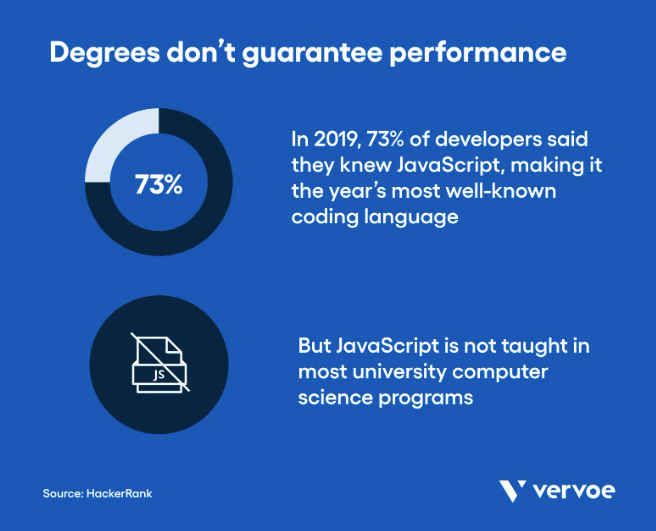
Companies like Vervoe have spent the last few years bringing skills-based hiring into the mainstream. Their platform enables employers to assess candidates through realistic tasks and job simulations, making it possible to identify high-quality performers based on what they can do, not where they’ve worked.
These assessments are customisable to the role, from customer support to software engineering, and are graded by AI to ensure objective and scalable evaluations. Research from Vervoe shows this approach not only improves the quality of hire but also dramatically reduces time-to-fill, all while reducing bias and levelling the playing field for candidates from diverse backgrounds.
Learn more about how Vervoe works.
So, How Do We Predict Performance?
If experience and unstructured interviews are unreliable, what should employers look for?
Studies consistently highlight the predictive power of general cognitive ability and emotional intelligence. These traits underpin learning agility, problem-solving, and interpersonal effectiveness – all critical in dynamic or complex roles. A comprehensive overview of these findings is available in open-access research by Zimmer et al..
Additionally, assessing job-relevant competencies, such as communication, adaptability, or decision-making, can provide a much clearer picture of how someone will perform.
Alignment with your organisation’s values is also probably the strongest indicator of long-term success. Which means that your organisation needs to authentically communicate and live its values.
It also means that your leaders and managers need to be adept at creating an environment that allows individuals and teams to perform. This means minimising micro-management, developing a mature approach to making mistakes, and delivering psychological safety where people can air their views.
When you know and can communicate how your team operates, and by this I mean the day-to-day work, their strengths, and gaps, you can hire people who complement and elevate that environment. People are unspurprisingly uncomplicated at a macro level. Provide a good work environment, meaningful work, good team mates and fair compensation, and most people would be happy.
The notion that past performance guarantees future success is deeply ingrained, but the evidence tells a different story. While experience can offer context, it is not a substitute for capability, adaptability, or fit.
To make better hiring decisions, moving beyond the CV and focusing on the real drivers of success is important. That means designing selection processes that reveal potential, not just pedigree, and hiring people not for where they’ve been, but for where they can go.
Need a Sounding Board for Your Hiring or Interview Process?
If you're wrestling with an interview challenge, whether it’s structuring better questions, reading between the lines of candidate responses, or aligning your team around what ‘good’ looks like, I’m happy to help.
I’m offering a handful of no-cost, no-strings-attached 15-minute calls to talk it through. Sometimes, a short conversation is all it takes to unlock clarity or spot a pattern you’ve been missing.
Just reply to this post or book a time here if you’d like to chat. No pitch, just a real conversation.
🧠 What I Learned About 17 Years in the Trenches From A Sales Leader Who Still Cares,
Dimitri spent 17 years at one company. That’s not a typo. In startup years, that’s practically fossilised. But what stood out wasn’t his longevity — it was how he stayed human, scrappy, and relentlessly values-driven the whole way through.
Watch the interview here.
Here’s what stuck with me:
1. The best salespeople actually care about the customer — not the commission
Dimitri’s line: “You can smell commission breath from a mile away.” The ones who didn’t last? They wanted the fast route to quota. The ones who stayed? They showed up with curiosity, humility, and a genuine desire to solve problems.
Caring isn’t soft. It’s the sharpest edge in your sales toolkit.
2. Startups need builders, not passengers
In the early years, he didn’t have marketing budgets or SDR teams — just a phone, a belief in the product, and a willingness to be told no 100 times a day. He wasn’t looking for shortcuts. He was building partnerships, one relationship at a time.
You want to scale? Hire people who think like owners, not passengers waiting for enablement to save them.
3. Foundations are everything
Dimitri talks a lot about values, alignment, and trust. Not as buzzwords — as the actual backbone of sustainable growth. He’s made the wrong hires. He’s owned it. And he’s seen firsthand how shaky foundations slow everything down later.
If the values aren’t right, nothing else will be.
Final thought
You don’t stay at a company for 17 years because it’s easy. You stay because you’re building something that matters. Because you believe in the people, the mission, and the customers.
Or, as Dimitri says: “We’re not taking any of this with us. So we may as well make things better while we’re here.”
